We have asked Mike from Deep South Construction in Bonaire Georgia to answer what to look for when signing with a contractor to build a new custom home?
1. The Right Licensing and Insurance (Non-Negotiables)
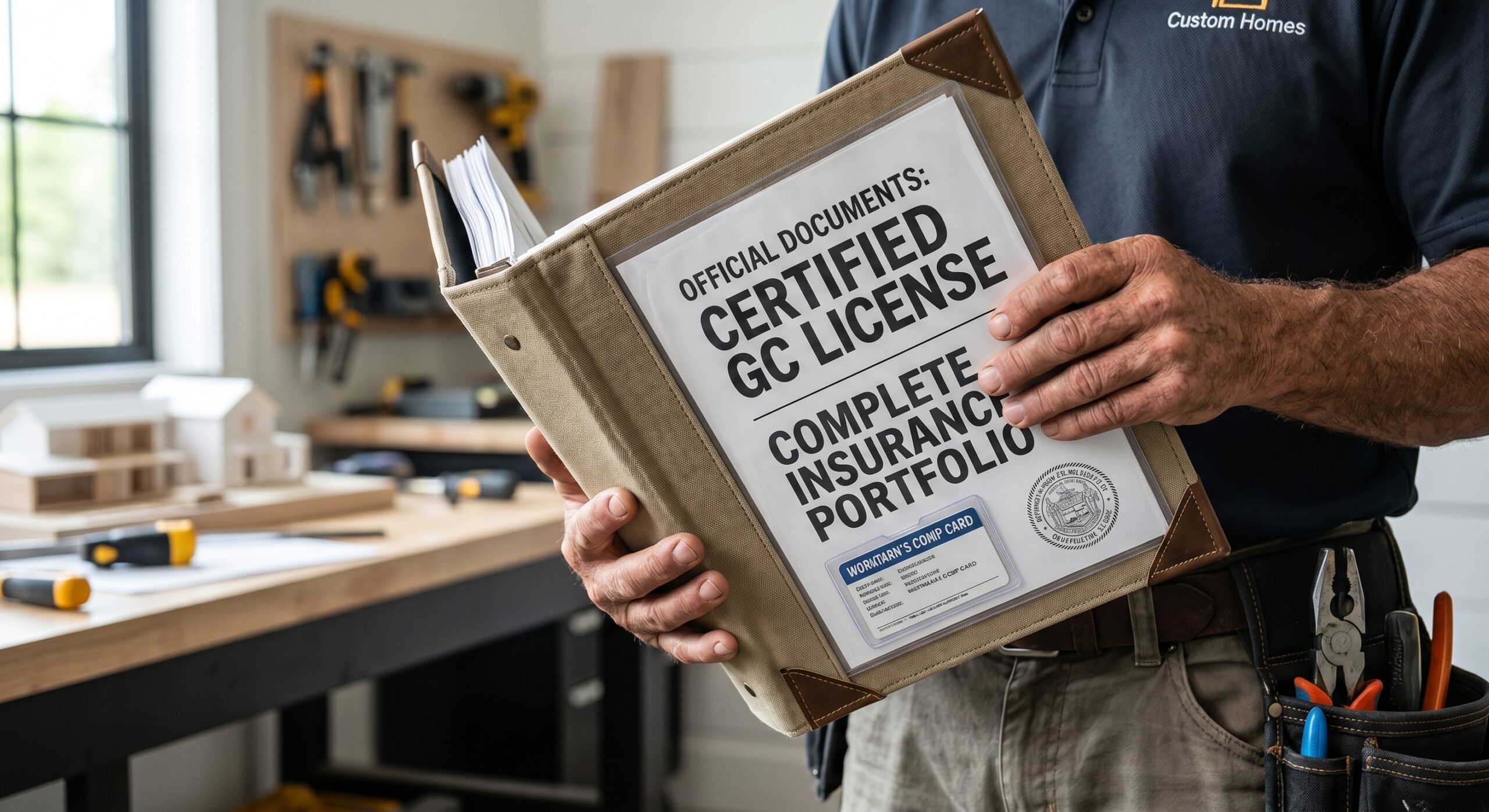
Never compromise on legal and financial protection. Before diving deep into a contractor’s portfolio, verify the following:
- Valid State Licensing: Ensure they hold a current Residential General Contractor’s license required by your state or local municipality.
- General Liability Insurance: This protects your property and neighboring properties in case of accidental damage. Ask for a certificate of insurance sent directly from their agency.
- Workers’ Compensation: This ensures that if a crew member or subcontractor is injured on your job site, you are not held liable.
2. Specific Experience with Custom Residential Builds
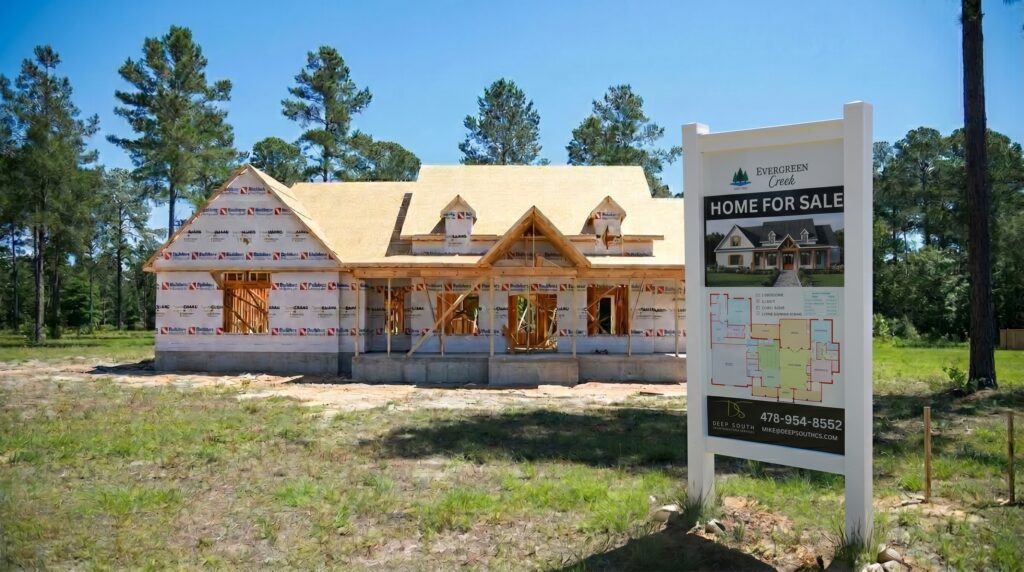
Building a custom home is entirely different from commercial construction, tract-housing production, or simple remodeling. Look for a builder who specializes in your specific type of project:
- Portfolio Alignment: Look at their past projects. Do they have experience building the architectural style you want (e.g., modern farmhouse, traditional, contemporary)?
- Scale and Complexity: If you are planning a complex build—such as a large footprint extension, a multi-story layout, or a specialized structure like a post-frame “shouse” (shop-house)—ask if they have successfully completed similar engineering challenges.
- Local Familiarity: A builder who regularly operates in your specific county or city will already know the local building codes, zoning laws, permitting processes, and soil/environmental conditions.
3. Financial Transparency and Estimation Systems
A custom home is a massive financial investment, and cost overruns are a common fear. You want a contractor who treats the financial side of the build with as much precision as the carpentry
- Detailed, Line-Item Estimates: Avoid builders who give vague “per square foot” ballpark estimates on a napkin. They should provide a transparent, itemized breakdown of costs (materials, labor, allowances, permits, and builder fees).
- Clear “Allowances” Policy: Custom homes rely heavily on “allowances” for finishes (like cabinetry, flooring, and fixtures). Ensure their initial allowances are realistic for the quality of home you want, so you aren’t blindsided by upgrades later.
- Change Order Protocols: Ask exactly how “change orders” (modifications made after the contract is signed) are processed, priced, and approved. A good builder will never perform extra work without a written, signed change order detailing the cost adjustment.
- Financial Tracking: Inquire about how they keep tabs on ongoing project expenses. Do they use dedicated construction project management software to track draws, receipts, and budget vs. actual costs in real-time?
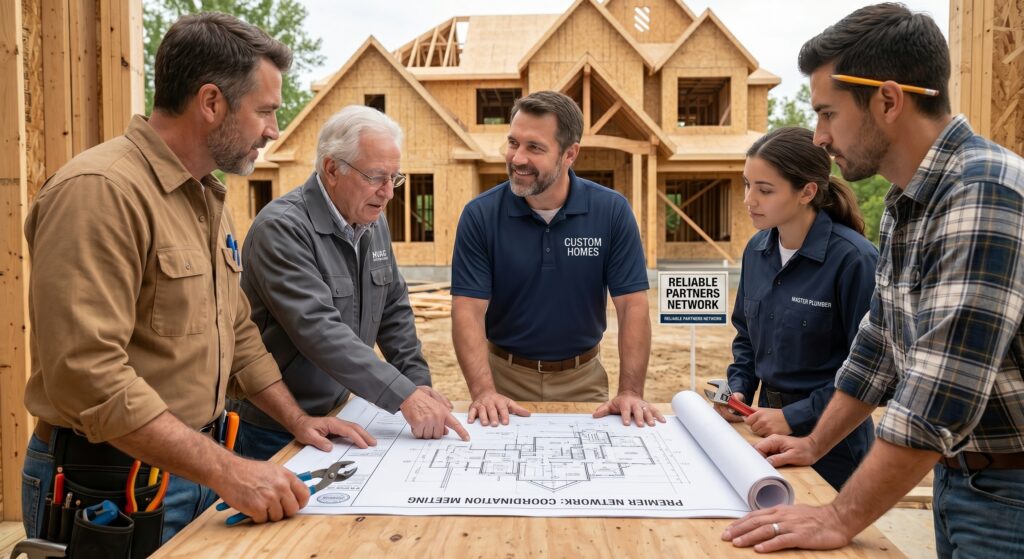
4. A Proven, Reliable Subcontractor Network
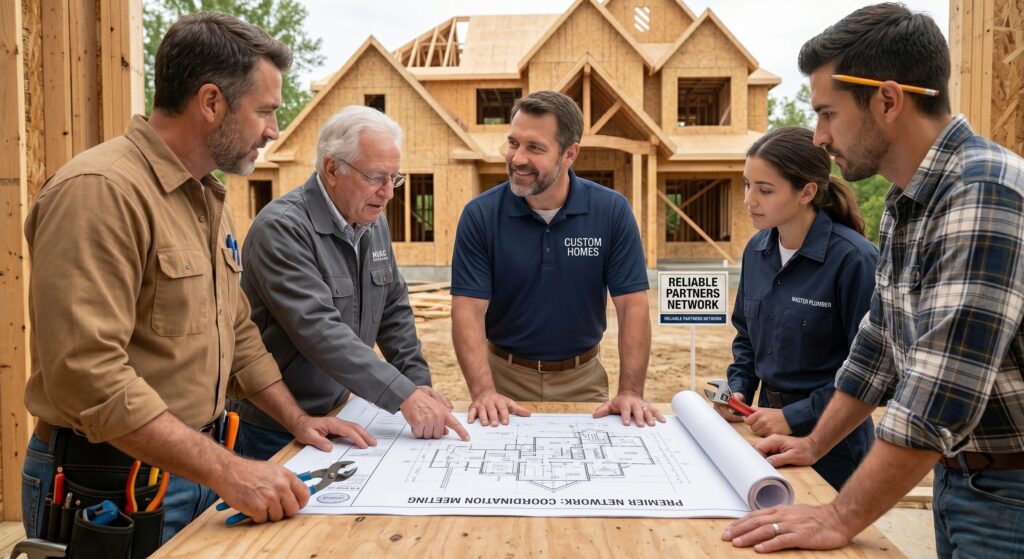
A custom home builder is only as good as the trade partners they hire. Most of the specialized work (foundation, framing, plumbing, electrical, HVAC) is performed by subcontractors.
- Established Relationships: Ask how long they have been working with their primary subcontractors. A builder with a loyal, long-standing network of local trades typically enjoys better scheduling priority and higher quality control than a builder who just hires the cheapest crew off the street for every new job.
Get the right Customer Builder
5. Communication Style and Project Management Systems
You will be working with this person for anywhere from six months to over a year. A breakdown in communication is the number one cause of custom home disputes.
- Primary Point of Contact: Will you be speaking directly with the business owner, a dedicated project manager, or an on-site superintendent?
- Site Supervision: How often will a supervisor actually be physically present on your job site to monitor quality control?
- Updates and Tech: Do they provide weekly scheduled updates? Many modern custom builders use client portals (like CoConstruct, Buildertrend, or similar systems) where you can log in to view daily logs, progress photos, schedules, and financial tracking.
6. Solid References and Local Reputation
A reputable builder should be proud to share their track record. Ask for:
- Recent Clients: Speak to clients who completed homes within the last 1–2 years. Ask them: Did the project finish on time? Were there unexpected costs? How did the builder handle mistakes?
- Past Clients (3–5 years ago): This is crucial for checking the quality of the build. Ask how the house has held up over time and how responsive the builder was to warranty requests after they received their final check.
- Supplier/Subcontractor References: If a builder doesn’t pay their lumber yard or concrete suppliers on time, those suppliers can place a mechanic’s lien on your new home. A builder in good financial standing with local suppliers is a massive green flag.
7. Comprehensive Warranty and Aftercare
The relationship shouldn’t end the day you get the keys.
- Review their warranty agreement in detail. A standard custom home warranty often includes a 1-year warranty for workmanship/materials, a 2-year warranty for mechanical systems (plumbing, electrical, HVAC), and a 10-year warranty for major structural components. Find out exactly how punch-list items and structural warranty claims are handled post-occupancy.
NEED A CUSTOM HOME BUILDER?
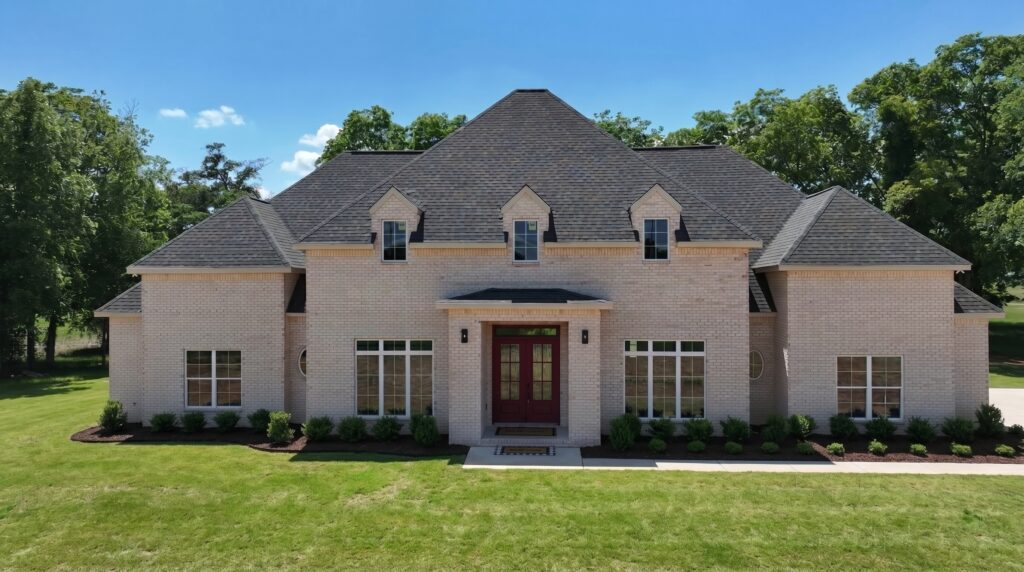
CHECK OUT A PREMIER BUILDER!
Affiliate Information
Middle Georgia Build for All Foundation participates in affiliate programs for selected products or services mentioned on this website. When visitors choose to follow one of these links and complete a purchase, a small portion of the proceeds is shared with our organization. These contributions directly support our mission to improve accessibility, safety, and independence for individuals and families throughout Middle Georgia.
The purpose of Middle Georgia Build for All Foundation is to assist underserved communities and mobility-challenged residents by providing accessible housing solutions, educational resources, and community support. Our work focuses on creating environments where individuals can move safely, participate fully, and maintain a strong sense of dignity and independence.
We believe every person deserves a home that supports their well-being, stability, and long-term quality of life. Affiliate support helps us continue offering vital services, building accessible structures, and expanding community programs that make these goals possible.
Thank you for helping us strengthen the lives of individuals and families across Middle Georgia.